


18 May 2026
Sit or stand? How a height-adjustable desk improves work efficiency
30 April 2026
The concept of hybrid work introduces a modern perspective. It is not about rotating between office and home, but about dynamically combining sitting and standing work. This definition best reflects the needs of professionals who want to maintain productivity in creative tasks. Interestingly, even a small change in desk height can significantly improve concentration and bring real health benefits. A height-adjustable desk, as part of an ergonomic ecosystem, becomes an essential tool in addressing the challenges of long hours spent in front of a monitor.
Working in one position for 8 hours is a daily reality for people employed in IT, offices, or call centers. However, sedentary lifestyle issues are not limited to full-time employees. Entrepreneurs and freelancers often spend even more time at the computer due to urgent projects. Office workers frequently stay overtime as well. In this model, the spine bears almost the entire responsibility of supporting the body, and every hour without movement increases muscle fatigue and joint stiffness. Chair selection alone is not enough. A height-adjustable desk becomes an interesting solution, improving comfort and encouraging healthy spinal movement.
Why does the body need vertical movement?
A static sitting position places significantly more strain on the musculoskeletal system than short periods of standing. While sitting, the lower back muscles gradually weaken. When standing, body weight is distributed more evenly between legs and torso.
Spine impact: standing at a desk reduces pressure on lumbar vertebrae. Natural spinal curves are maintained, reducing risk of disc strain.
Circulation control: upright posture improves blood flow in lower body parts, reducing “heavy legs” and improving brain oxygenation and focus.
Metabolism in motion: light muscle engagement boosts glucose metabolism, helping fight afternoon fatigue.
Three success strategies: choose your workflow rhythm
The way sitting and standing are combined should match the nature of tasks. Modern office furniture supports this flexibility. A great option is the adjustable electric desk Unique Astra, featuring dual motors and a load capacity of up to 160 kg.
50/10/50 model – 50 minutes sitting, 10-minute active break, then 50 minutes standing.
45/15 model – 45 minutes sitting, 15 minutes standing, balanced for everyday use.
30/15 model – 30 minutes sitting, 15 minutes standing, designed for maximum dynamism.
Electric desks Unique support all these workflows.
Technology that keeps you in rhythm – Unique Active desks
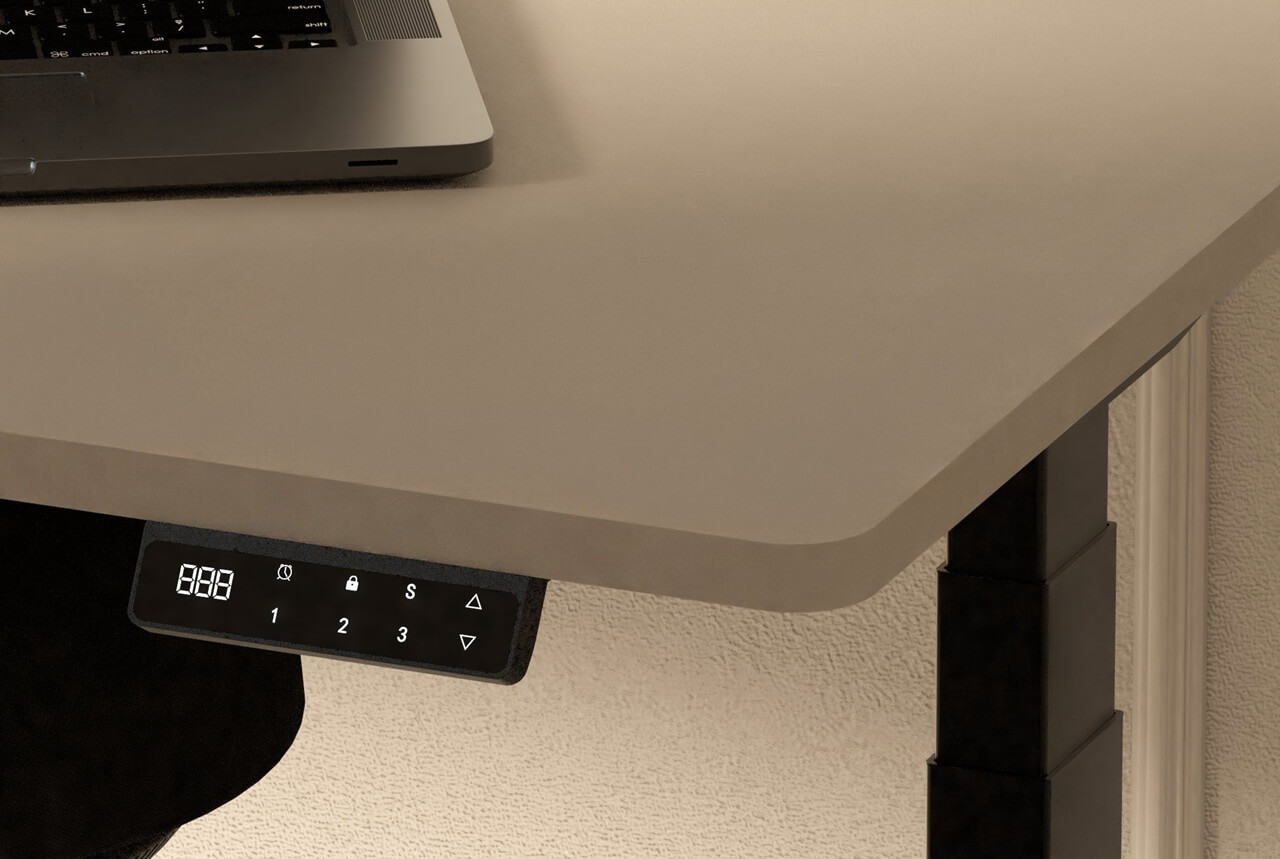
The Unique Active desk collection combines durability with modern electric adjustment technology. The lifting speed reaches 50 mm/s, with silent motors and soft start/stop functionality. The control panel allows saving three positions and includes a USB-C port for charging devices.
The structure supports up to 125 kg and includes anti-collision protection. Available in white, black, and grey frames, with various tabletop shapes and configurations.
How to stand correctly? Ergonomic principles
Weight should be evenly distributed on both feet. Knees should remain slightly bent, and forearms should rest comfortably on the desk at around 90°.
Desk height: elbows at 90°, monitor at eye level.
Active standing: avoid locking knees; shift weight regularly.
Footwear and surface: stable shoes and anti-fatigue mats improve comfort.
Investing in health means investing in performance
Modern office equipment improves productivity and reduces muscle tension. Switching from static to dynamic posture reduces back pain and improves circulation. Combined with ergonomic chairs and accessories, electric desks create a healthier workspace.